

In a dramatic escalation of political tensions in Uganda, armed security operatives today morning raided the Wakaliga home of former Kampala Lord Mayor, Advocate Erias Lukwago, violently arresting him just hours after he revealed difficulties in serving court process to the Chief of Defence Forces (CDF), Gen Muhoozi Kainerugaba.
The high-profile arrest has sent shockwaves through the country’s political landscape, drawing fierce and unified condemnation from across the opposition divide.
Critics have roundly described the incident as a state-sponsored abduction aimed at intimidating legal professionals and disrupting the legal defense of veteran opposition leader, Dr Kizza Besigye.
The operation, which unfolded at approximately 10am, occurred shortly after Lukwago had concluded a press briefing at his residence.
According to his wife, Nalongo Zawedde Lubwama Lukwago, security personnel wearing uniforms belonging to the elite Special Forces Command (SFC) scaled the perimeter wall to gain entry into the compound.
Nalongo Zawedde says he was in the bedroom where they picked him from.
Just hours before his arrest, Lukwago informed the press that his team was actively struggling to serve Gen Muhoozi Kainerugaba with a human rights enforcement lawsuit filed by Besigye.
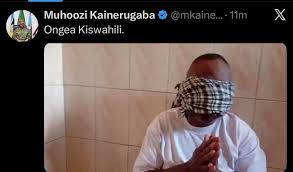
Following the raid, Gen Muhoozi posted an image appearing to depict a blindfolded Lukwago at an undisclosed location, alongside captions claiming the lawyer was under detention learning Kiswahili.
Meanwhile, the arrest of Lukwago has triggered a wave of outrage from top opposition figures, who view the state’s actions as an overt declaration of lawlessness.
From self-imposed exile, the President of the National Unity Platform (NUP), Robert Kyagulanyi, alias Bobi Wine, condemned the state’s tactics and called on citizens to challenge the regime’s actions.
Concurrently, the Forum for Democratic Change (FDC) Vice Chairperson Robert Centenary characterized the raid as a direct assault on both the independence of the judiciary and fundamental constitutional freedoms.
Former Member of Parliament and prominent defense lawyer Medard Lubega Sseggona noted that while the exact motives remain unconfirmed by formal police communication, the timing strongly points toward political persecution linked to Lukwago’s professional duties.
By press time, neither the Uganda Police Force nor the Uganda People’s Defence Forces (UPDF) had issued an official statement regarding Lukwago’s whereabouts, the legal basis for his detention, or the specific security agency holding him.
The Secretary General of the People’s Front for Freedom (PFF), Ssemujju Ibrahim Nganda, says party president Erias Lukwago was scheduled to serve court papers on the Chief of Defence Forces, Gen. Muhoozi Kainerugaba, before his alleged abduction from his home.
Ssemujju said that the party does not know where Lukwago has been taken because his phones were taken away from him.
In a post on X, Gen. Muhoozi Kainerugaba said Lukwago had been taken to the “basement”, a term critics have previously associated with alleged safe houses where opponents are reportedly tortured.
The Uganda Law Society warned that it will pursue both domestic and international legal action over what it describes as growing intimidation of lawyers and interference with the legal profession.
Speaking during a press briefing in Kampala, representatives of the National Bar said they expect a response from government and relevant institutions within 24 hours, warning that failure to address their concerns could trigger legal proceedings in multiple jurisdictions.
The warning comes amid escalating tensions between the legal fraternity and security agencies following Monday’s humiliating arrest of senior counsel Erias Lukwago.
The legal fraternity says the action by the military threatens the independence of the legal profession and the administration of justice.
ULS leaders said that while they continue to place confidence in Uganda’s judiciary, they are prepared to explore regional and international mechanisms should domestic remedies prove inadequate.
Among the options being considered are petitions before regional and continental human rights bodies, including the African Court on Human and Peoples’ Rights, which hears cases involving alleged violations of rights protected under the African Charter.
The lawyers expressed particular concern about the safety and security of advocates handling politically sensitive and high-profile criminal cases, including matters involving terrorism-related charges.
The society maintained that its position is not aimed at confrontation but at safeguarding constitutional governance, judicial independence and public confidence in the justice system.