

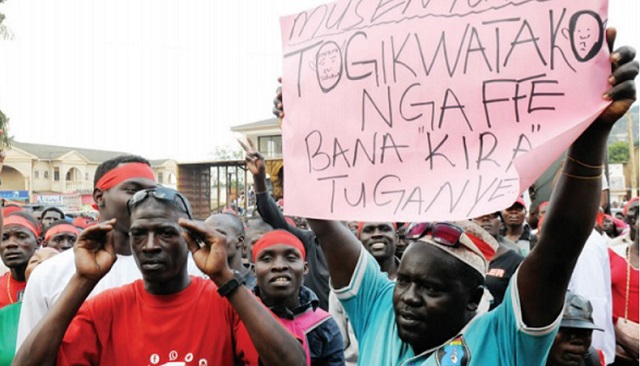
The Alliance for National Transformation (ANT) has strongly condemned the proposed Sovereignty Bill, 2026, describing it as a “death sentence” for Uganda’s democracy and economic stability.
The party said the Bill, which is set for detailed scrutiny by Parliament’s joint committees on Defence and Internal Affairs, and Legal and Parliamentary Affairs, is a disguised attempt by the ruling elite to consolidate absolute power under the guise of protecting national interests.
ANT Acting National Coordinator, Alice Alaso Asianut, said the legislation represents a direct attack on the fundamental rights of Ugandans and warned that its passage could isolate the country and reverse gains made in civil society space and economic development.
The party, led by former military commander Mugisha Muntu, argued that the Bill is designed to weaken opposition voices and suppress citizens rather than protect sovereignty.
ANT raised concerns that vague clauses in the proposed law could be used to criminalise activists, opposition politicians, and even online expression deemed critical of government.
The party also warned of serious economic consequences, saying the Bill could deter foreign investors and disrupt donor funding, thereby affecting essential services such as healthcare, education, and humanitarian support provided by NGOs.
It further criticised provisions that would centralise oversight within a single ministry, arguing that this would reduce transparency and weaken accountability in governance.
ANT has called for the Bill to be withdrawn entirely and proposed a broad resistance strategy involving opposition parties, civil society organisations, and professional associations. It also suggested public engagement through town halls, radio discussions, and potential constitutional challenges in court.
The party’s position comes amid parallel concerns from the Uganda Bankers Association, which has also opposed the Bill, warning that it could disrupt financial systems and create regulatory conflicts.
The Bill, introduced in Parliament on April 15, 2026, and endorsed by the ruling National Resistance Movement (NRM) caucus on March 27, 2026, has already sparked heated debate among legislators and stakeholders.
Parliament’s Committee on Defence and Internal Affairs now has 45 days to scrutinise the proposed law as debate over its implications continues to intensify.